OEM and ODM aren't interchangeable buzzwords. The one you pick changes your IP rights, your time-to-market, your MOQ, and the story you can tell on a label. Here's how to decide.
"OEM" and "ODM" get thrown around in skincare manufacturing as if they were synonyms. They aren't — and picking the wrong model for your situation wastes months and real money. This post walks through what each term actually means, when each is the right fit, and how to choose based on your stage and budget.
The short version
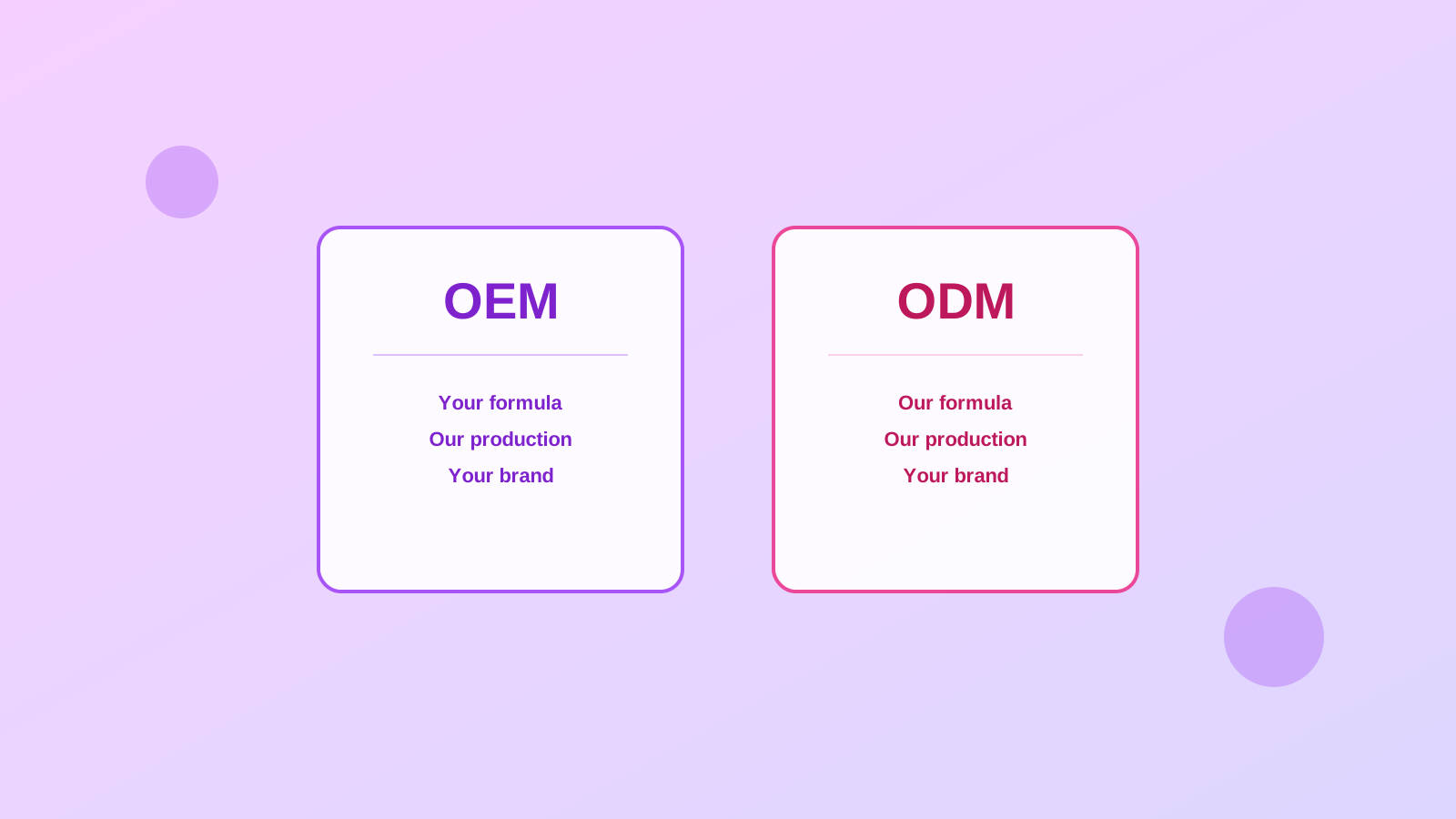
- OEM (Original Equipment Manufacturer) — you bring the formula, the factory produces it under your brand.
- ODM (Original Design Manufacturer) — the factory brings the formula from its library, and your brand gets applied on top.
In cosmetics, OEM is often called "custom formulation" and ODM is often called "private label" — and this is where the vocabulary starts leaking. Different factories use the terms differently. What matters is which party owns the formula.
OEM: when custom formulation is worth it
OEM makes sense when at least one of these is true:
- You have a hero ingredient story only you can tell (e.g., a proprietary peptide complex, a clinically tested actives ratio, a unique extraction).
- Your brand positioning depends on formula differentiation — clinical, clean, dermatologist-developed, etc.
- You have an R&D partner or formulator you already work with, and you need a factory that can produce their spec.
The trade-offs are real:
| Factor | OEM |
|---|---|
| Time to first shipment | 4–6 months |
| MOQ | 5,000–10,000+ units |
| R&D cost | $5,000–$30,000 before production |
| Stability testing | 3–6 months, paid by you |
| IP ownership | You own the formula |
| Pricing | Higher unit cost |
If you don't have a formula story that genuinely matters to your customer, OEM is over-investment.
ODM: when private label wins
ODM is the right fit when:
- You want to be in market in 60–90 days, not six months.
- Your differentiation lives in branding, positioning, and channel, not the formula itself.
- You're testing category fit before committing to custom R&D.
- You want a lower MOQ and lower cash commitment for a first run.
ODM is how most successful skincare brands actually start. The factory's library formula has already been stability-tested, already has a compliance paper trail, and already has packaging partners lined up. You layer your brand identity on top.
| Factor | ODM |
|---|---|
| Time to first shipment | 60–90 days |
| MOQ | 3,000–5,000 units |
| R&D cost | Typically $0–$2,000 (tweaks only) |
| Stability testing | Already done |
| IP ownership | Factory owns the formula |
| Pricing | Lower unit cost |
The hybrid model most brands actually use
In practice, very few brands stay purely OEM or purely ODM. A healthy skincare brand looks like:
- Hero SKUs on OEM — 1–2 products where the formula is part of the story, fully custom.
- Supporting SKUs on ODM — 3–6 products filling out the line, private labeled from factory formulas.
This gives you a differentiated hero product without needing to fund custom R&D for every SKU in the catalogue. It's also how you scale a line from 2 SKUs to 8 SKUs in a year without blowing up your inventory cash.
How to decide today
Answer three questions honestly:
- Does my target customer actually care about the formula, or do they care about how it feels, looks, and fits into their routine? If it's the latter, start with ODM.
- Do I have $30,000+ of cash I can tie up for six months before a single unit ships? If not, start with ODM.
- Am I confident enough in this category to commit to a custom formula? If you're testing, start with ODM. Go OEM on your second or third SKU.
The common thread: most founders over-index on OEM because it sounds more serious. ODM is usually the right first move.
If you want a specific recommendation based on your category and go-to-market, send us a brief. We'll recommend the right model — even if the honest answer is "start with ODM somewhere else and come back in 12 months."
Planning a launch like this?
Our team can scope sampling, compliance, and packaging in a single reply. Typical response time is one business day.
Get in touch