A practical guide for skincare brand founders on sourcing under-eye patches — covering hydrogel vs microneedle formats, ingredient positioning, MOQ tiers, MSRP benchmarks, and the compliance steps that differ from standard sheet masks.
Under-eye patches are one of the highest-velocity SKUs in modern skincare retail. They photograph well, fit a price point most DTC brands can defend, and the under-eye concern — dark circles, puffiness, fine lines — cuts across almost every demographic. For brand founders building or expanding an eye care line, they're also one of the most straightforward private label formats to launch. But "straightforward" doesn't mean all formats are equal. This guide covers everything you need to know before placing a first order.
Why under-eye patches sell so well
Three dynamics make under-eye patches a reliable private label SKU:
- Visible, fast results. A 15-minute hydrogel patch reduces puffiness enough that most customers notice the difference. That immediacy drives repeat purchase and social sharing.
- High gift appeal. A pair of patches is a low-risk, photogenic gift item. Retail multipacks (30 pairs, 60 pairs) are consistently among the strongest performers in the eye care category on Amazon.
- Price tolerance. Consumers buying eye care products expect to pay a premium compared to basic sheet masks. A credible brand can charge $18–$45 for a box of 30 hydrogel pairs and hold that price point with a clean formulation story.
None of this is guaranteed — there are plenty of eye patch SKUs that underperform. The difference almost always comes down to format choice and ingredient story.
Hydrogel vs microneedle: the core decision
Every private label eye patch brand eventually faces the same fork: hydrogel or microneedle. The two formats address the same concern from completely different angles.

Hydrogel is a gelatinous substrate soaked in a high-essence formulation. It conforms to the under-eye contour, stays cool against the skin, and delivers active ingredients through prolonged contact. The mechanism is diffusion — the patch sits there, the skin absorbs. It's passive, effective, and very well understood by consumers.
Microneedle patches use dissolving hyaluronic acid needles (typically 200–800 μm long) to physically pierce the stratum corneum and deposit actives below the surface. The mechanism is delivery — ingredients go where topical diffusion can't reliably reach. The trade-off is complexity: longer production time, higher cost, and a consumer education challenge.
| Dimension | Hydrogel | Microneedle |
|---|---|---|
| Target concern | Puffiness, dryness, dark circles | Fine lines, firmness, deep hydration |
| Wear time | 10–20 minutes | 2–4 hours |
| Consumer experience | Cooling, relaxing, "spa" | Clinical, targeted, premium |
| Typical MSRP (30 pairs) | $18–$35 | $40–$90 (4–8 pair box) |
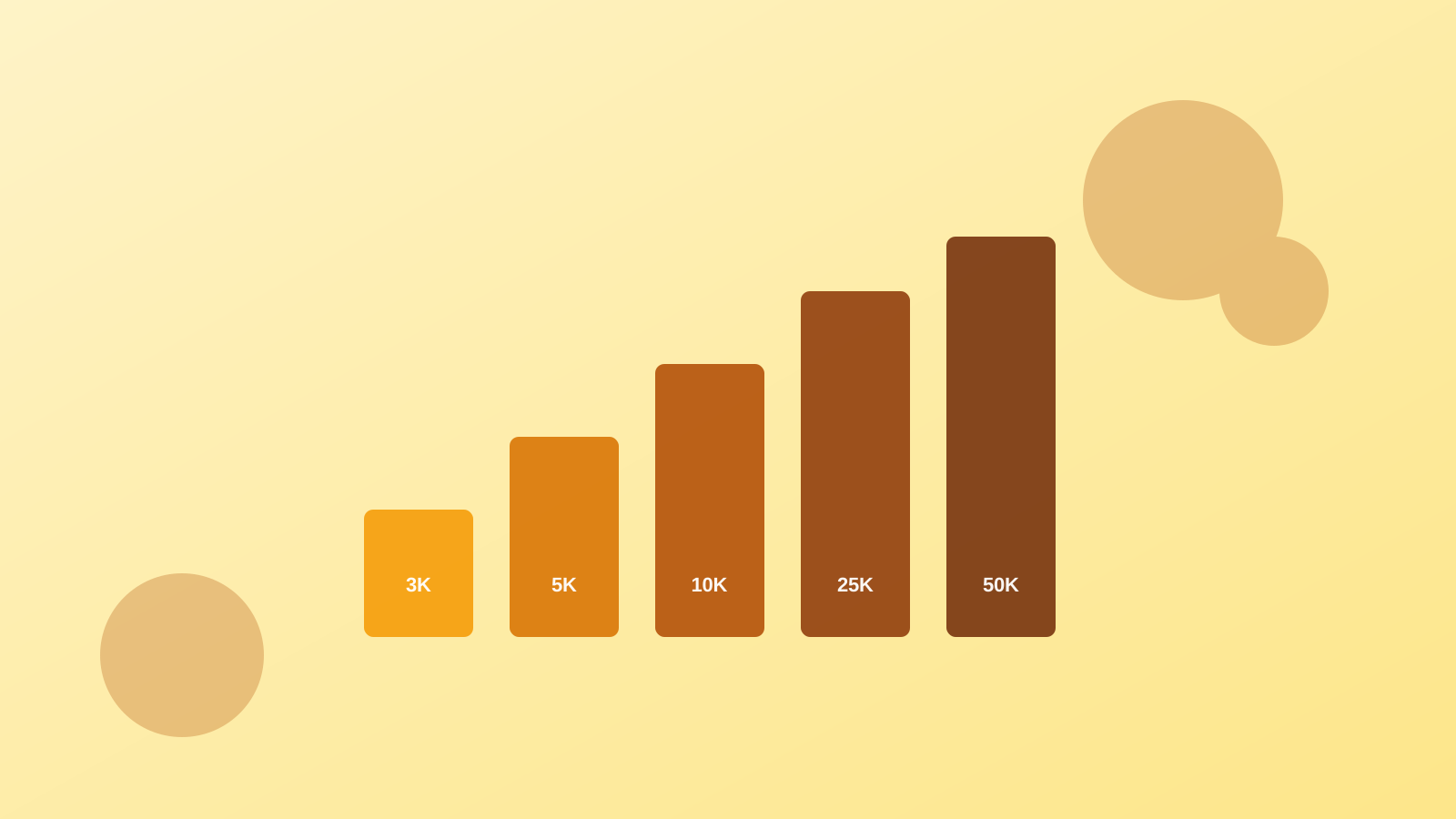
| MOQ | 3,000–5,000 boxes | 5,000–10,000 boxes |
| Sampling lead time | 2–3 weeks | 4–6 weeks |
| Production lead time | 30–35 days | 45–60 days |
| Shelf life | 24–36 months | 24 months |
| Best channel | Mass retail, DTC, gifting | DTC, premium retail, clinical |
The practical starting point for most first-time eye care brands is hydrogel. It has a lower MOQ, faster sampling, and a market that already understands the product. Microneedle is the right move when you're building a premium line from day one and have the cash runway to absorb the higher first-order cost.
Ingredient positioning: what actually drives purchase intent
The substrate is the delivery vehicle. The ingredient stack is the story. In the under-eye category, three active combinations reliably convert in EU and US markets:
Caffeine + Peptides — the workhorse. Caffeine constricts blood vessels for a visible depuffing effect within minutes. Peptides (palmitoyl tripeptide-1, tripeptide-38) support collagen and firm the skin over repeated use. This combination has the broadest demographic appeal and the strongest claim-to-evidence ratio for most regulatory paths.
Collagen + Hyaluronic Acid — the hydration story. Biodegradable collagen provides film-forming moisture. Triple-weight HA (low, medium, and high molecular weight) delivers surface and deeper hydration simultaneously. Best for brands positioning around plumpness and anti-dehydration rather than anti-aging.
Retinol + Niacinamide — the clinical story. Retinol drives cell turnover and targets fine lines; niacinamide evens pigmentation and reduces inflammation. This combination requires more careful stability management (retinol degrades in light and air) and a packaging spec that protects the active. It commands the highest MSRP of the three but has higher production complexity and a smaller eligible-consumer base due to sensitivity concerns.
MOQ tiers and unit economics
Here's what the numbers look like at the standard production tiers for hydrogel under-eye patches:
| Order size | Unit cost (per pair) | Total inventory cost | Notes |
|---|---|---|---|
| 3,000 boxes (30 pairs) | $0.45–$0.65 | ~$13,500–$19,500 | Minimum viable run |
| 5,000 boxes | $0.35–$0.55 | ~$17,500–$27,500 | Best cost for first brand launch |
| 10,000 boxes | $0.28–$0.45 | ~$28,000–$45,000 | Suitable when you have proven sell-through |
At a 5,000-box run with a $25 MSRP, you're looking at a 55–65% gross margin at DTC after landed cost and fulfilment. That's a healthy SKU for a DTC-first launch. If you can get to 10,000 units, the unit economics improve meaningfully and open up wholesale channels without margin compression.
Compliance considerations specific to eye patches
Under-eye patches sit in a slightly different compliance position than face sheet masks because of the proximity to the eye.
In the EU: The same CPNP notification and Responsible Person requirements apply as for any leave-on cosmetic. The key additional requirement is that ingredients and claims are assessed against proximity to the mucous membrane. Anything that can migrate into the eye must be ophthalmologically tested — your manufacturer should be able to provide this for their stock formulas.
In the US: Under-eye patches are typically classified as cosmetics (not OTC drugs) as long as claims stay in cosmetic territory — "reduces the appearance of puffiness," "hydrates the skin around the eye," etc. Avoid language like "treats dark circles permanently" or "heals under-eye tissue," which can push a cosmetic into OTC drug territory.
On Amazon US: Eye care products occasionally get flagged during listing review. Having the full compliance dossier ready — COA, SDS, stability data, ingredient disclosure — from your manufacturer before you list is the cleanest way to avoid a surprise hold.
What to ask your manufacturer before you order
Five questions that separate prepared manufacturers from ones that will slow you down post-launch:
- What ophthalmological test data do you have on this formula? A credible eye care manufacturer has peri-ocular tolerance testing, not just standard cosmetic safety data.
- Can you provide COA + stability data specific to the lot I'm ordering? Not general data — lot-specific.
- What is the actual essence weight per pair? "High essence" is marketing. You want grams: 1.5g per pair is entry level, 2.0g+ is competitive, 2.5g+ is premium.
- Can you do a custom cut for the under-eye shape? Stock shapes fit most faces. Custom die-cuts for smaller or larger under-eye areas add about 4 weeks and raise MOQ but can meaningfully improve the consumer experience.
- What's your cold-chain capability for summer shipments to GCC or Southeast Asia? Hydrogel patches are temperature-sensitive in high-humidity environments above 35°C.
A realistic first-order structure
For a brand launching its first eye care SKU with a DTC + Amazon US channel strategy, this is the structure we typically recommend:
- Format: Hydrogel, stock cut, stock pouch, printed label
- Formula: Caffeine + Peptides base (available as stock formula, faster sampling)
- Pack size: 30 pairs per box (mass-market sweet spot on Amazon)
- First order: 5,000 boxes
- MSRP target: $22–$28
- Expected margin: ~60% at DTC, ~40% at wholesale
This gets you a credible, well-margined SKU in 30–40 days from PO to warehouse. Once you have 3–6 months of real sell-through data, you add the microneedle SKU as a premium extension at $40–$55.
If you want samples of our hydrogel and microneedle under-eye patch formulas before you decide, we ship side-by-side sample kits within five business days.
Planning a launch like this?
Our team can scope sampling, compliance, and packaging in a single reply. Typical response time is one business day.
Get in touch